China agents, explained through their paperwork
What is a China agent, concretely: a purchasing desk plus a warehouse. The desk buys it for you on marketplaces that will not ship abroad or take your card; the warehouse holds, photographs and consolidates. Everything else, including everything that can go wrong, is written in each desk’s terms.
The middleman layer, piece by piece
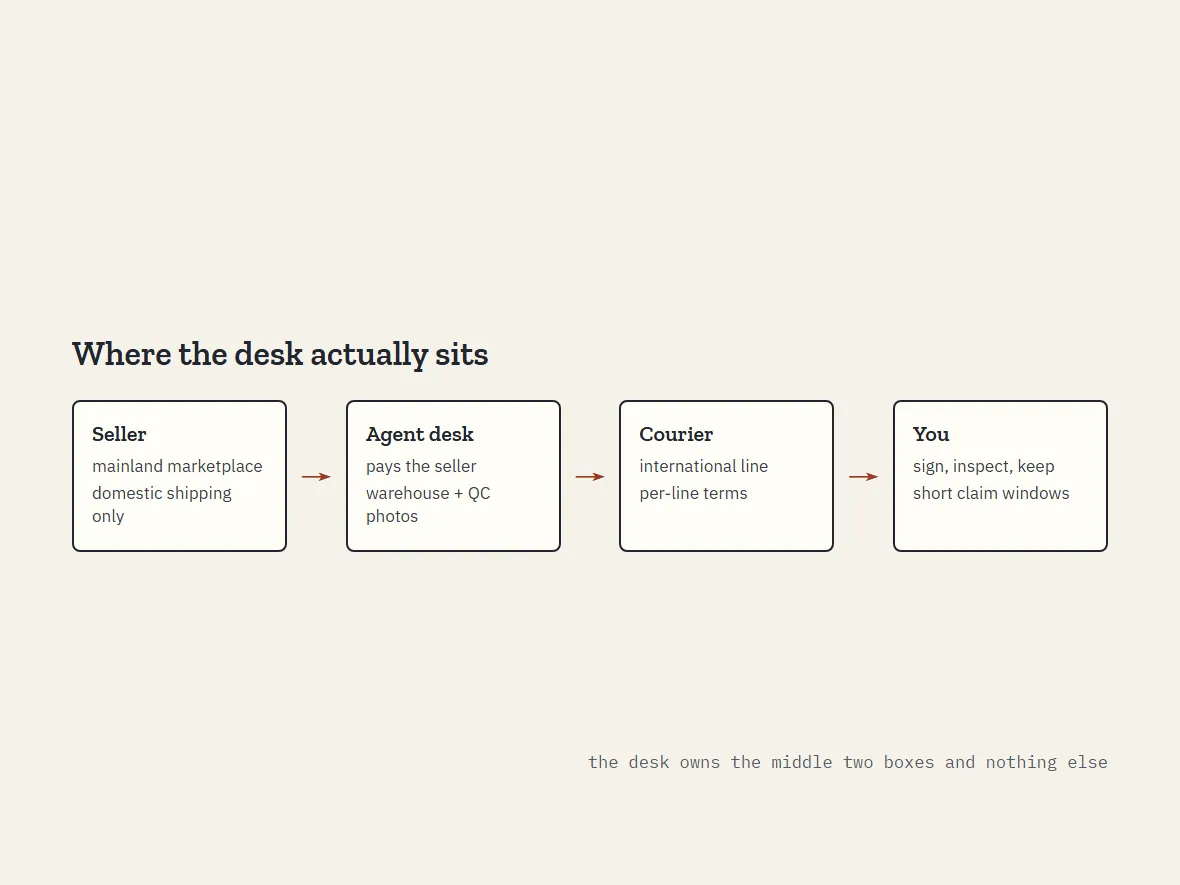
Mainland marketplaces run on domestic logistics, domestic payment rails and Chinese-language sellers. A shopping agent sits in the gap: you paste a product link, the desk pays the seller with a mainland account, the item lands in the desk’s warehouse, and from there it is photographed, stored and eventually packed into an international parcel.
That is the whole trick. The agent never makes the item and rarely touches the seller relationship beyond relaying requests. When you later ask for a return, the desk is a messenger with a deadline, which is exactly why the deadlines on the undo page matter more than any marketing line.
All six desks in the ledger hold goods under named stages: Stocked in, Warehoused, In Warehouse, Arrived in warehouse. Four different labels for the same shelf, and four different fine-print clocks hanging off them.
The case for the middleman layer
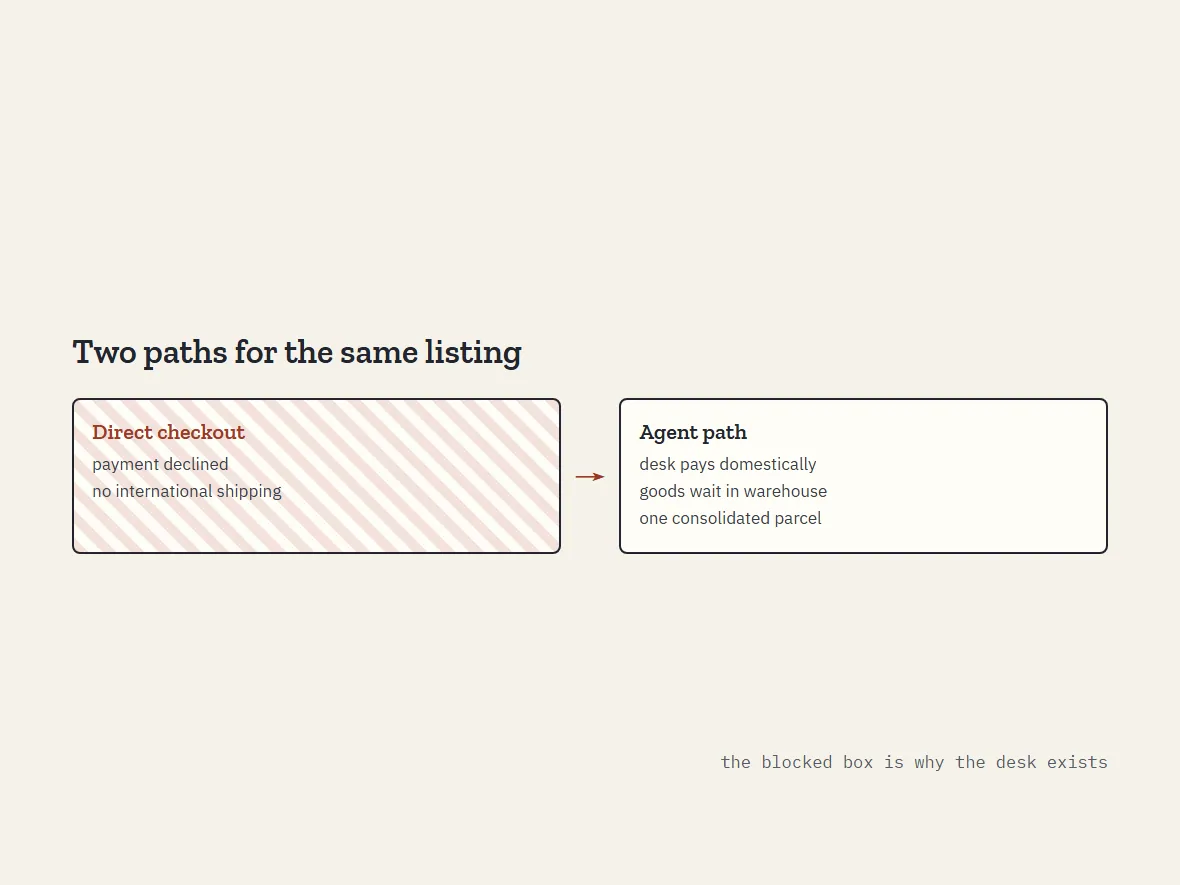
The honest case for why you would buy through an agent is narrow and strong:
- Access: sellers on Taobao, Weidian and 1688 mostly take mainland payment and ship domestically. The desk converts both problems into its own.
- A pause button: goods sit in the warehouse (60 to 100 free days depending on the desk, figures on the costs page) while you decide, add items, or back out inside the return window.
- Evidence: warehouse photos before the international leg; read what they prove on the QC page.
- Consolidation: ten domestic parcels leave as one international one, and the maths of that is most of the saving.
What an agent gets you, compressed: reach, time and photographs. What it costs you is documented fee by fee on the costs page.
The situations where a desk earns nothing
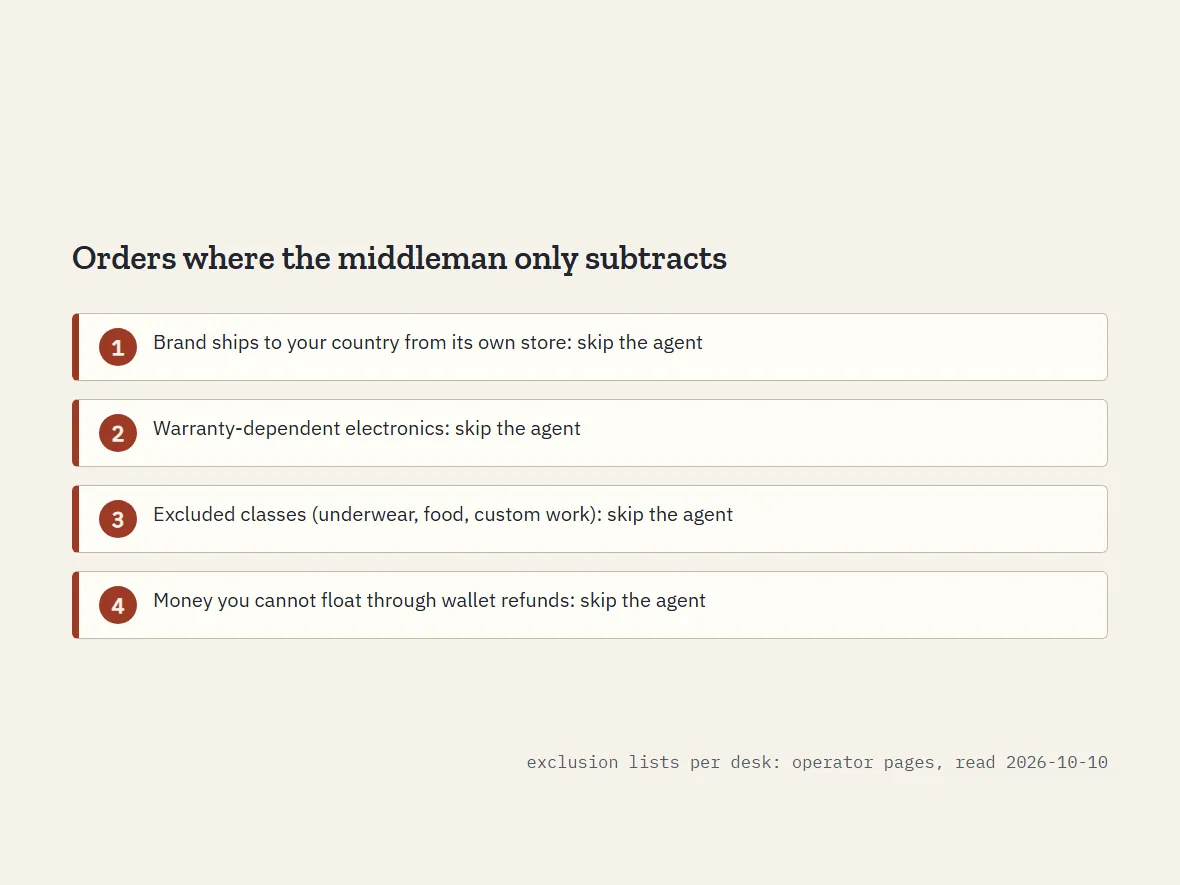
A fair ledger also records when not to use one. Skip the agent layer when:
- The brand ships to your country from its own store; a middleman adds fees and a second customs story to the same box.
- You need warranty service. Electronics cross the ledger desks with appearance-only inspection, no power-on test, and warranty claims route back to a mainland seller on your postage.
- The item is on the exclusion lists that gut the return window: underwear, food, custom work, opened media. The lists per desk are on the undo page.
- You cannot float the money. Refunds land in desk wallets first in several ledgers, and one desk locks certain wallet refunds against withdrawal entirely.
A desk is a tool for reach and patience. It is a bad tool for urgency and a worse one for aftercare.