Shipping lines, volumetric weight and the customs story
The international leg is where agents stop being shops and become freight brokers. Three decisions live here: which shipping line, what the box weighs on paper, and what you declare. Each one is also an insurance decision in disguise.
The line shelf: counted, not praised
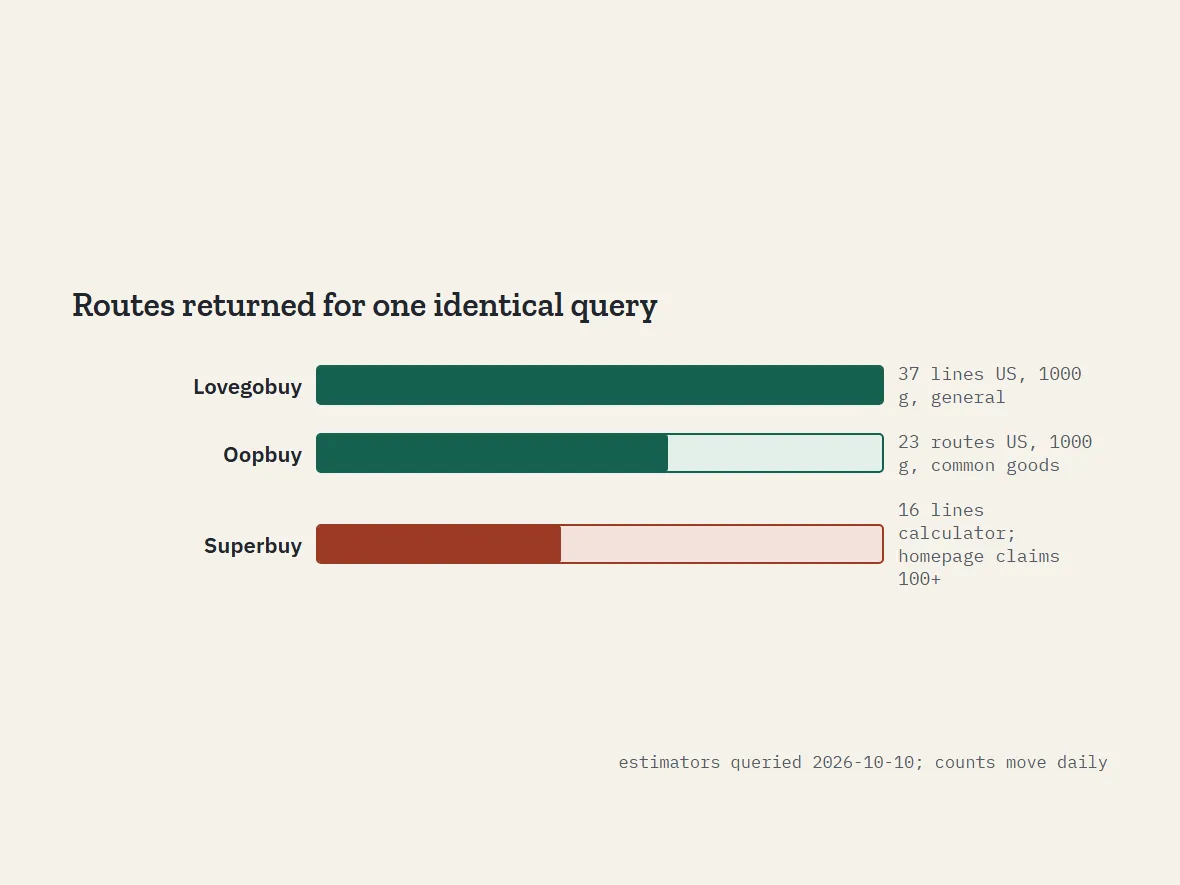
Route coverage is one of the few agent claims you can count. Same query, same day (a 1,000 g common-goods parcel to the United States, 2026-10-10): Oopbuy’s estimator returned 23 routes, Lovegobuy’s 37, and Superbuy’s calculator 16 while its homepage claims 100+ lines. Counts move daily; the method is the point.
Every line card in an estimator is a bundle of terms: a price per kilogram, a time range, a weight and size limit, an insurance flag, and a tax story (lines marked tax-free price the customs risk into the rate; others leave it with you).
Lovegobuy’s pages carry the clearest warning about flag-reading: its postal and UPS routes take no insurance at all (article, read 2026-10-10). A cheap line that cannot be insured is a different product from the same line with cover.
The weight the courier invents
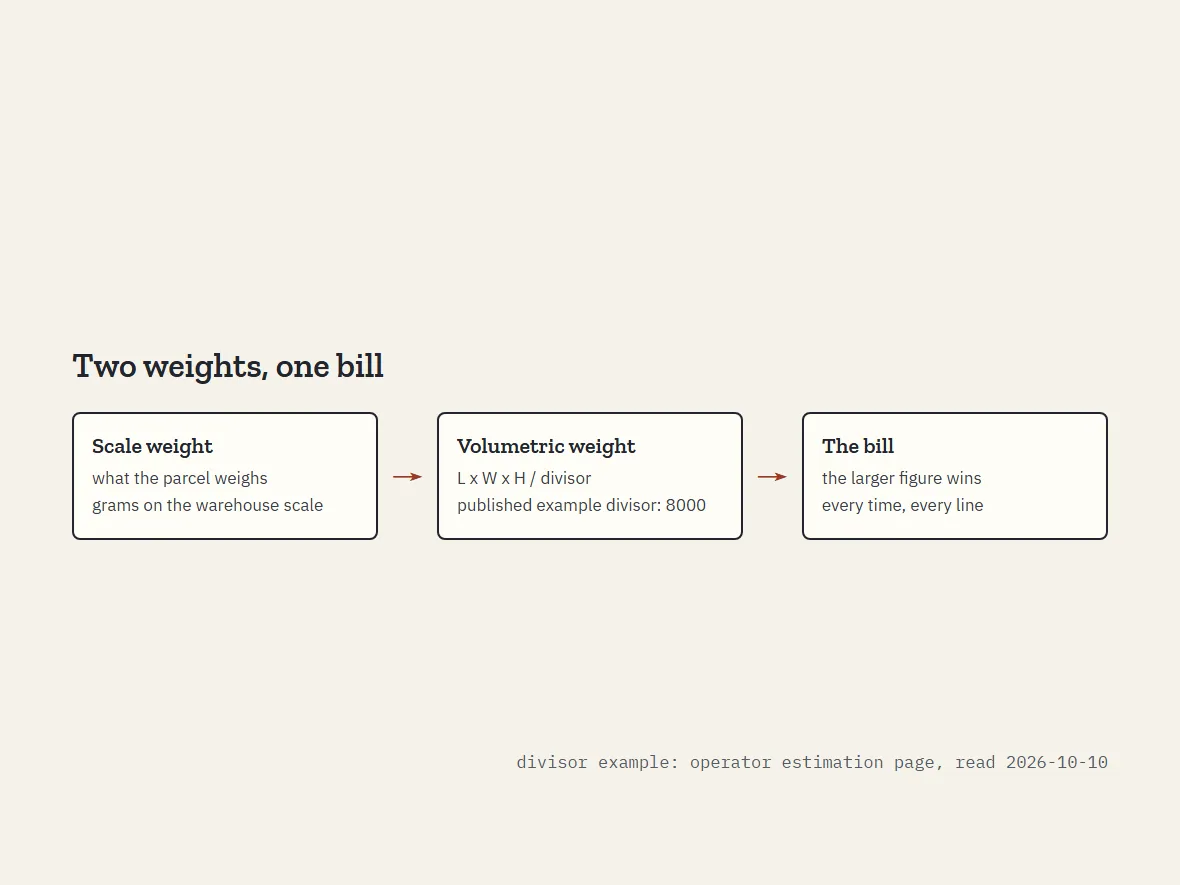
Freight bills on the larger of two weights: the scale’s, or the volumetric figure computed as length times width times height in centimetres over a divisor. LoongBuy publishes 8000 as its example divisor (estimation page, read 2026-10-10); per-line coefficients vary and sit in each estimator’s line card.
A puffer jacket is the classic casualty: 800 grams on the scale, two kilograms on paper once boxed. The desks’ own answers are compression packing (a value-added service) and the rehearsal quote: LoongBuy documents a parcel-rehearsal service that weighs and measures before you commit, with the difference refunded or collected (policy page, read 2026-10-10).
The storage meters on the costs page buy you time to consolidate well; one oversized box can cancel a season of careful fee reading.
Declared value: compensation base and customs story at once
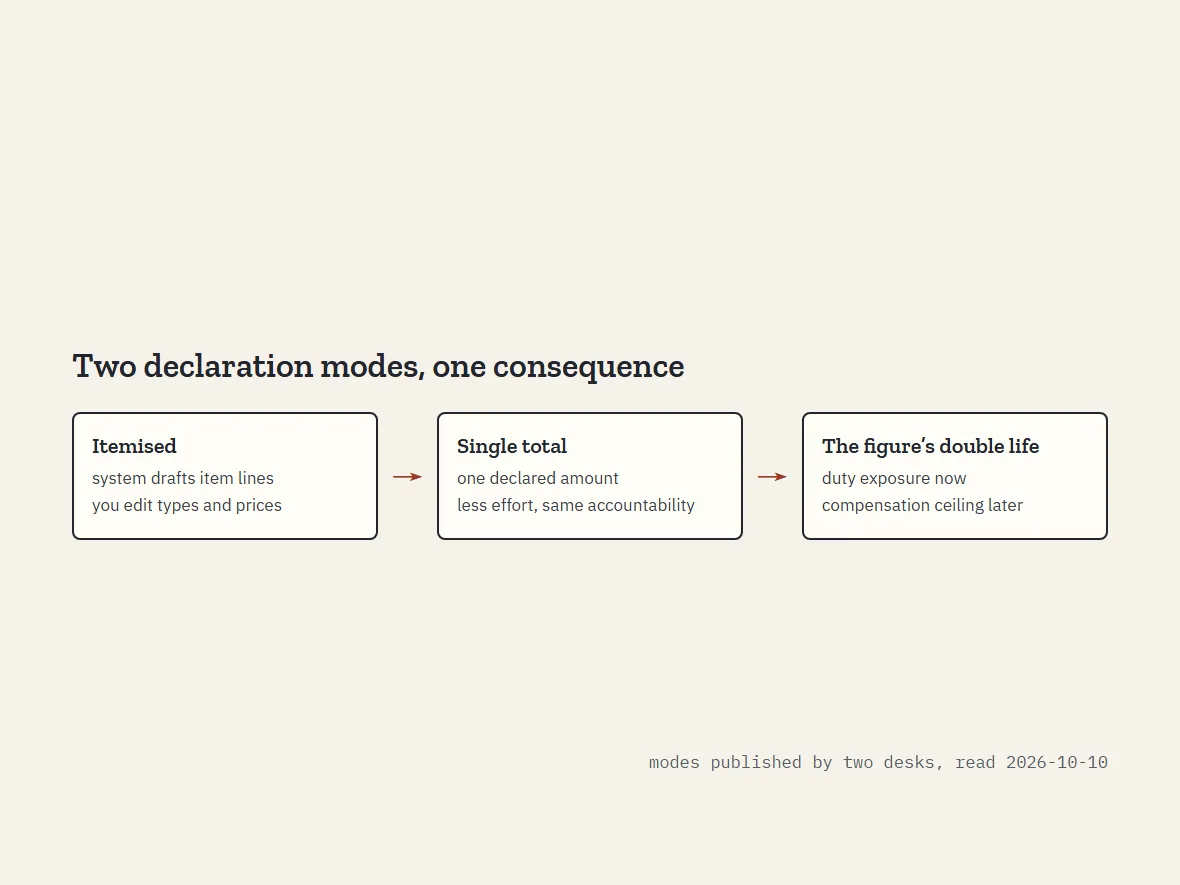
At parcel submission you declare contents and value. Two desks publish the mechanics in matching detail: Oopbuy offers self declaration (editable item lines) and fuzzy declaration (one total figure); Lovegobuy mirrors it as Personalized and System Declare (both read 2026-10-10). The modes differ in effort, not in accountability: customs risk from an unreasonable declaration stays with the buyer, and the operators print examples of unreasonable (three pairs of shoes at one dollar).
The declared figure then leads a double life. Too low: duty saved now, but it caps loss compensation and reads as mis-declaration at inspection. Too high: duty paid on value that is not there.
Customs duties themselves are destination law, not agent policy; what the desk owes you when a parcel is seized or stalls is on the undo page under claims.