Five tests that sort catalogue sites, run here in public
Choosing a good spreadsheet is the same job as choosing a good agent: ignore the self-description, measure the maintenance. Five tests below, each one runnable in minutes, and each one run against this site in public at the bottom.
Five measurable tests for any catalogue site
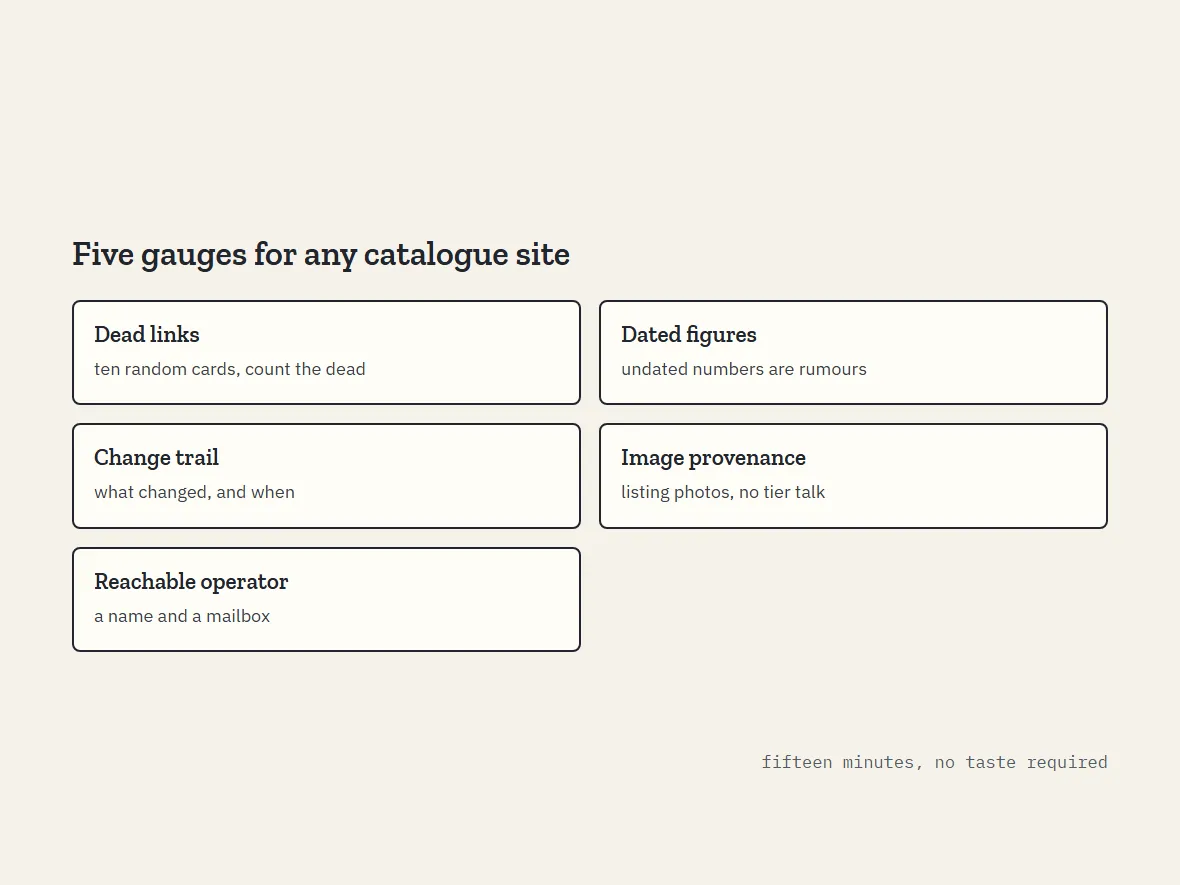
What makes a trustworthy spreadsheet is not taste; it is upkeep you can verify:
- Dead-link rate: open ten product cards at random; count the ones that still load a live listing. Catalogues rot from the links inward, and a site that does not retest its own links is displaying history, not inventory.
- Dated figures: any price, fee or policy number should carry the date it was read. An undated number is a rumour wearing a font.
- A maintenance trail: a page that says what changed and when; without one you cannot tell a tended site from an abandoned one, because abandoned sites keep smiling.
- Image provenance: catalogue photos should be product photos, not stock art; grading words pasted on images (any tier talk) mark a site selling stories.
- A reachable operator: a name and a mailbox that answers. Anonymous catalogues have nothing at stake when a link goes bad.
Run the five against any finds site in about fifteen minutes. Sites that fail two or more are not evil, just unmaintained, and unmaintained catalogues cost you exactly as much as wrong ones.
The same five tests, run on this site
A test catalogue that exempts itself is marketing, so here is the self-reading:
- Dead links: every outbound link on this site is HTTP-tested as part of the build routine, and the catalogue cards link to live listing pages pulled 2026-10-13.
- Dated figures: policy numbers on this site carry read dates (mostly 2026-10-10 for operator pages, 2026-10-08 for the fee-tracker snapshot). Found one without a date: that is a defect; mail it in.
- Maintenance trail: the updates page logs changes with dates.
- Image provenance: category tiles are real listing photos from the catalogue; diagrams are drawn for this site and contain no grading language.
- Contact: no public contact mailbox is listed. The about page explains the editorial method and referral funding. This limits site-level correction reporting; use your agent’s official channels for order support.
The point of publishing the self-reading is that you can re-run it any day and catch this site slipping; that threat is the maintenance plan.
Applying the tests to community finds pages
Community finds collections (image boards, chat exports, influencer lists) fail these tests in predictable places: links point at searches instead of listings, prices are screenshots from months ago, and nobody owns the errors.
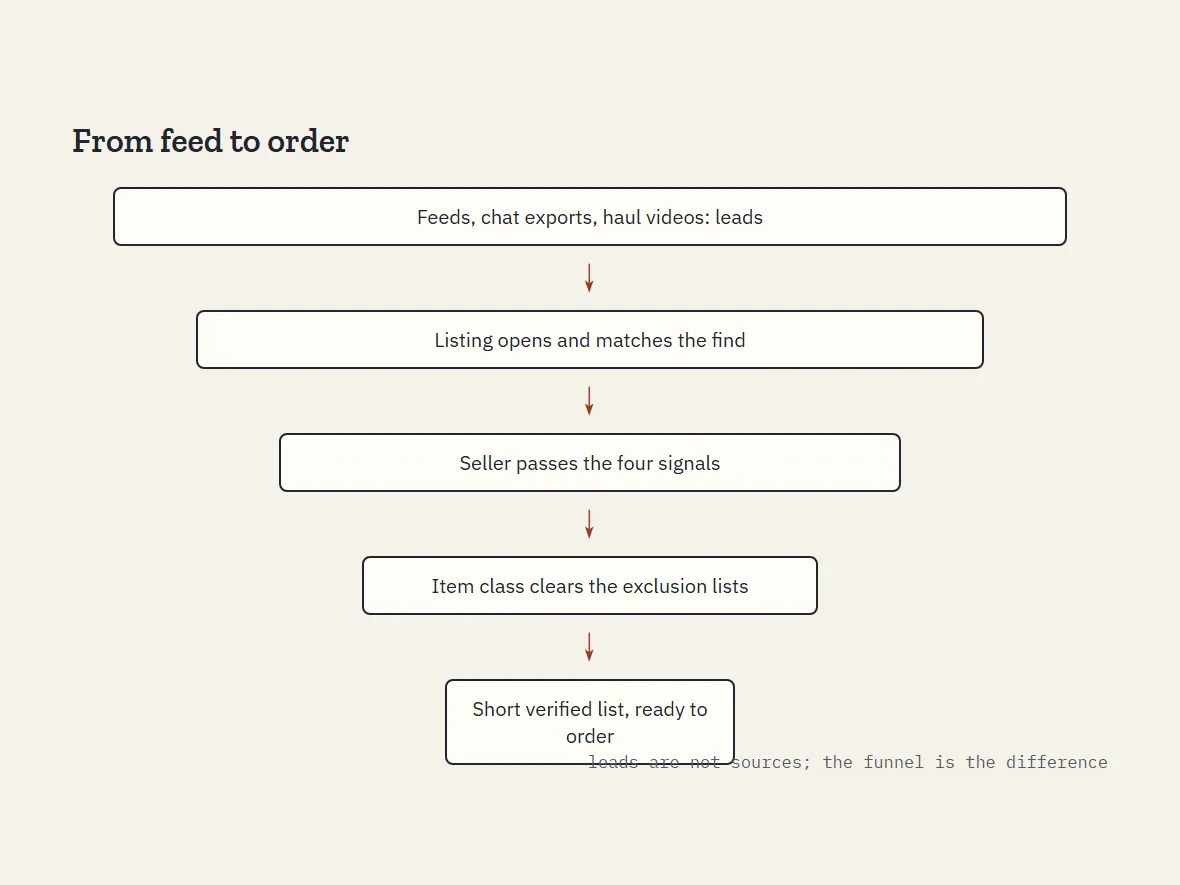
They are still useful as discovery, the way rumours are useful to journalists: leads, not sources. Treat any find from a feed as unverified until the listing opens, the seller checks out against the seller tests, and the item class clears the exclusion lists on the undo page.
The browsable catalogue on the home page is this site’s answer to the same problem: cards that resolve to live listings, retested, with the terms ledger one click away.