Risk signals: reading a desk before it reads your card
Agents fail in four shapes: the desk that eats your order, the desk that disappears, the parcel that arrives wrong, and the refund that exists only in chat. Each shape throws signals first. This page is the signal catalogue.
What eating an order looks like in statuses
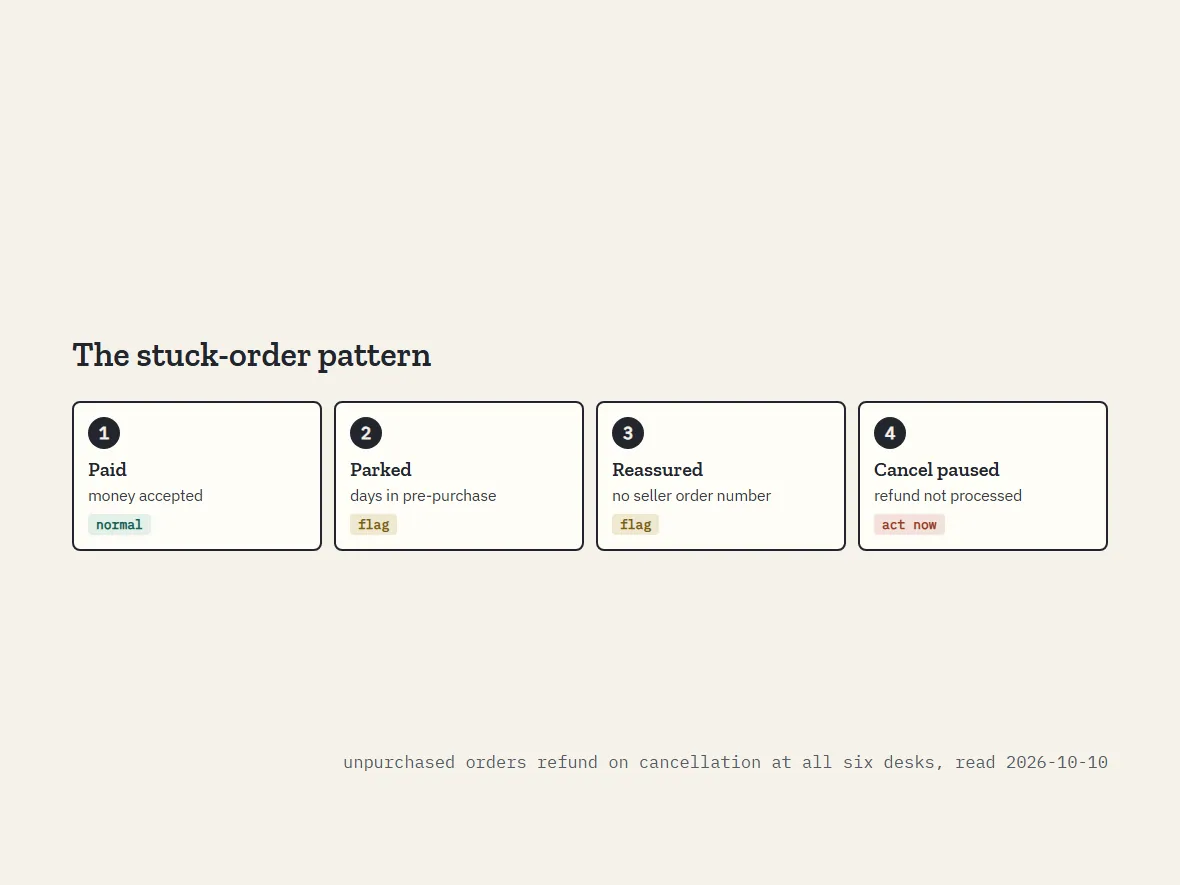
Nobody announces they are sitting on your money. In the account view it looks like this: payment accepted, then the order parks in a pre-purchase status for days; support answers with soft reassurances and no seller order number; a cancellation request pauses instead of refunding.
The countermeasure is built into the ledger desks’ own terms: unpurchased orders refund on cancellation, in writing, at every desk in this ledger. The moment a desk resists that clause on an unpurchased order, you have your answer; cancel inside the window and take the money to a desk that honours its own page.
Status literacy is the whole defence. The walkthrough names the stations; anything that lingers between stations one and two with your cash is a flag, not a queue.
The vanishing-desk homework
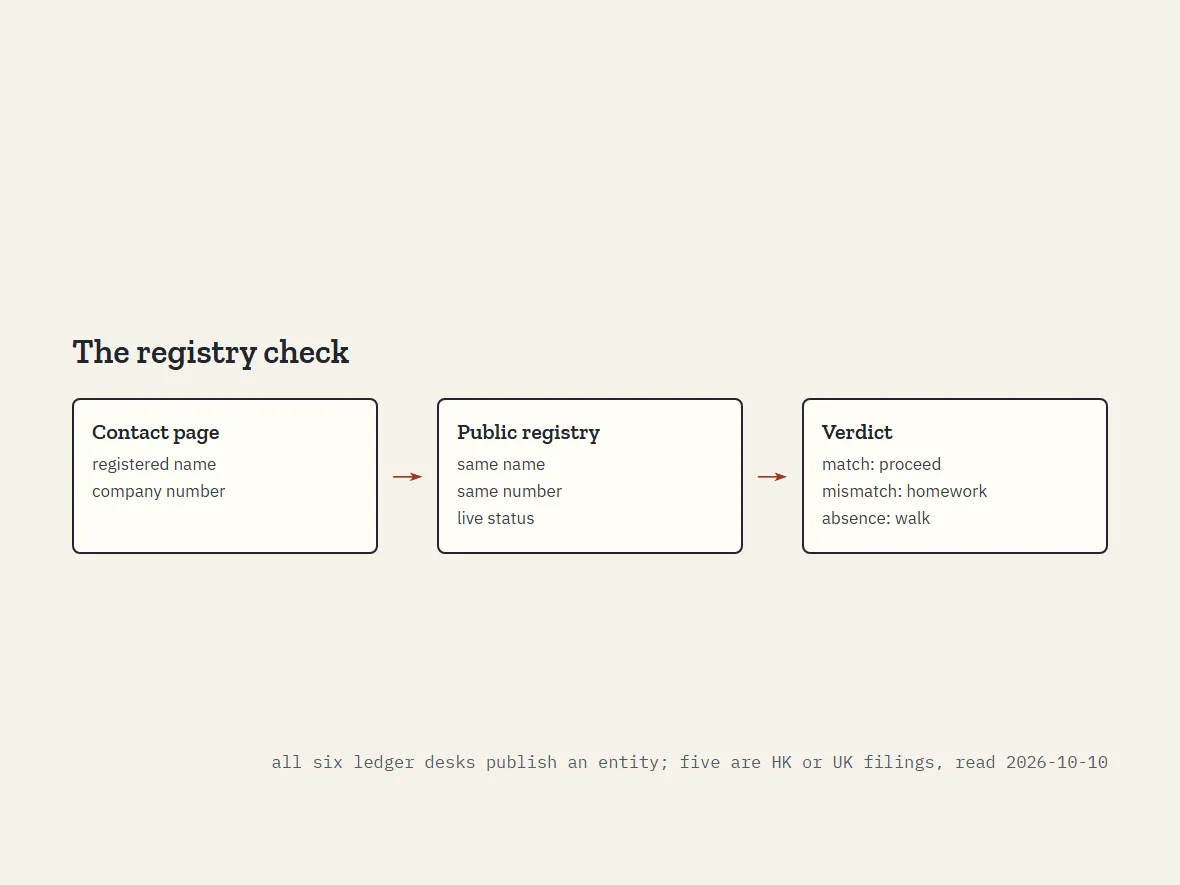
Desks that fold take warehouses full of goods with them. The pre-order homework that separates a registered operator from a landing page:
- Find the registered entity on the operator’s own contact page. All six ledger desks publish one; five are Hong Kong or UK registrations with company numbers you can look up in the public registry (readings dated 2026-10-10 on the profiles page).
- Cross-check the name against the app-store listing. One ledger desk prints a US company on its About page while its UK filing and app-store seller carry two other names; three names for one desk is a thing you want to know before, not after.
- Watch for entity swaps: another desk changed its printed footer entity between June and October 2026 while the old name still sits in its language files. Changes are not guilt, but unexplained changes are homework.
- Check that terms pages carry dates and survive in an archive; a desk that rewrites history on its own pages will rewrite it on your order.
None of this needs tools beyond a registry search and an archive lookup; twenty minutes, once per desk, before money.
Wrong goods, fake goods, refused parcels
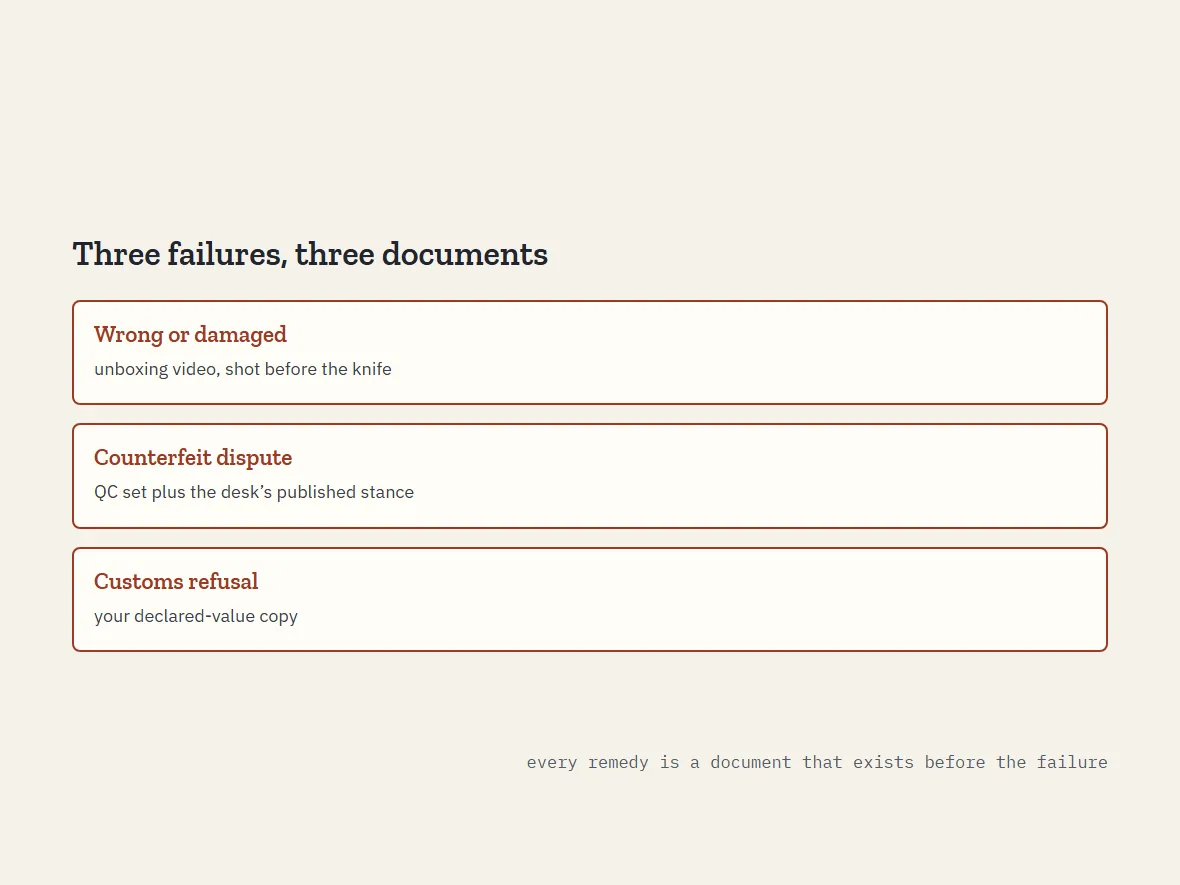
Three failure shapes share one defence: evidence created before you needed it.
- Wrong or damaged on arrival: the claim windows are brutal (3 days after receipt at one desk, 7 at two others); an unboxing video shot before the knife is the only evidence those windows accept. Windows and sources on the undo page.
- Suspected counterfeit at the warehouse: one ledger desk folds suspected-counterfeit disputes into its paid insurance terms with video proof required; another publishes a standalone anti-counterfeiting policy page. Read the stance of the desk you use; this site quotes stances per desk and never guesses authenticity itself.
- Refused or seized at customs: the declared value you chose becomes the ceiling of the conversation; the shipping page covers declaration modes and their consequences.
The common thread: every remedy is a document you either have or do not. The desks publish which documents; the QC page covers the one set the warehouse makes for you.