
The undo checker: your stage, your desk, your open doors
Set the desk, the order stage and the item flags; the checker prints which doors are still open, which clause governs each one, and where that clause was read. It computes from the same dated ledger the rest of this site quotes.
The checker itself
Doors still open: 1 · conditional: 0 · shut: 0
still open Return or exchange
no-reason return within 5 days of the goods arriving at the warehouse, for items the seller supports, in saleable condition; buyer pays return shipping.
Source: help article id 80, 5-Day Return Policy, read 2026-10-10
On third-party marketplaces the seller has the final say on any return the desk relays. That is platform-inherent: it is shown here but never counted as a door.
Driving the checker, and its deliberate silences
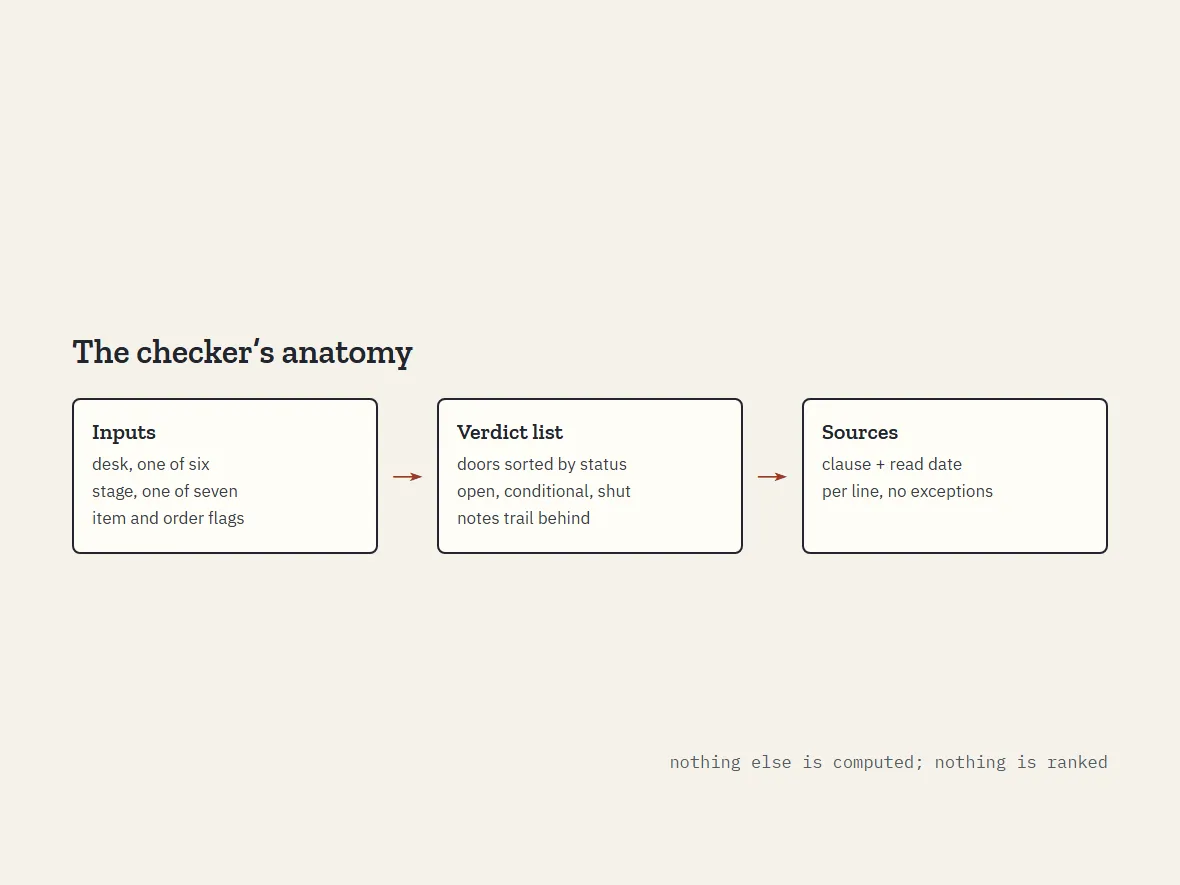
How to use this tool: three inputs cover the whole decision space: the desk (six in the ledger), the stage (seven stations from paid-not-purchased to delivered), and flags for the item classes and order forms that rewrite the rules: custom work, sealed goods, electronics, manual request forms, and whether a QC set already exists.
The output is a verdict list sorted by countable status only: open doors first, then conditional ones, then shut. Every line carries its policy source and read date, so you can walk from any verdict to the operator’s page and check that it still says what we read. Where a desk publishes nothing for a stage, the checker prints the gap and tells you to collect the answer in writing; silence is data here, not a blank.
One deliberate absence: the checker never compares desks against each other and never scores anything. Platform-wide realities, like the seller having the final say, are shown as notes and kept out of the counts; a desk is never debited for a rule that binds all six equally.
Three worked readings
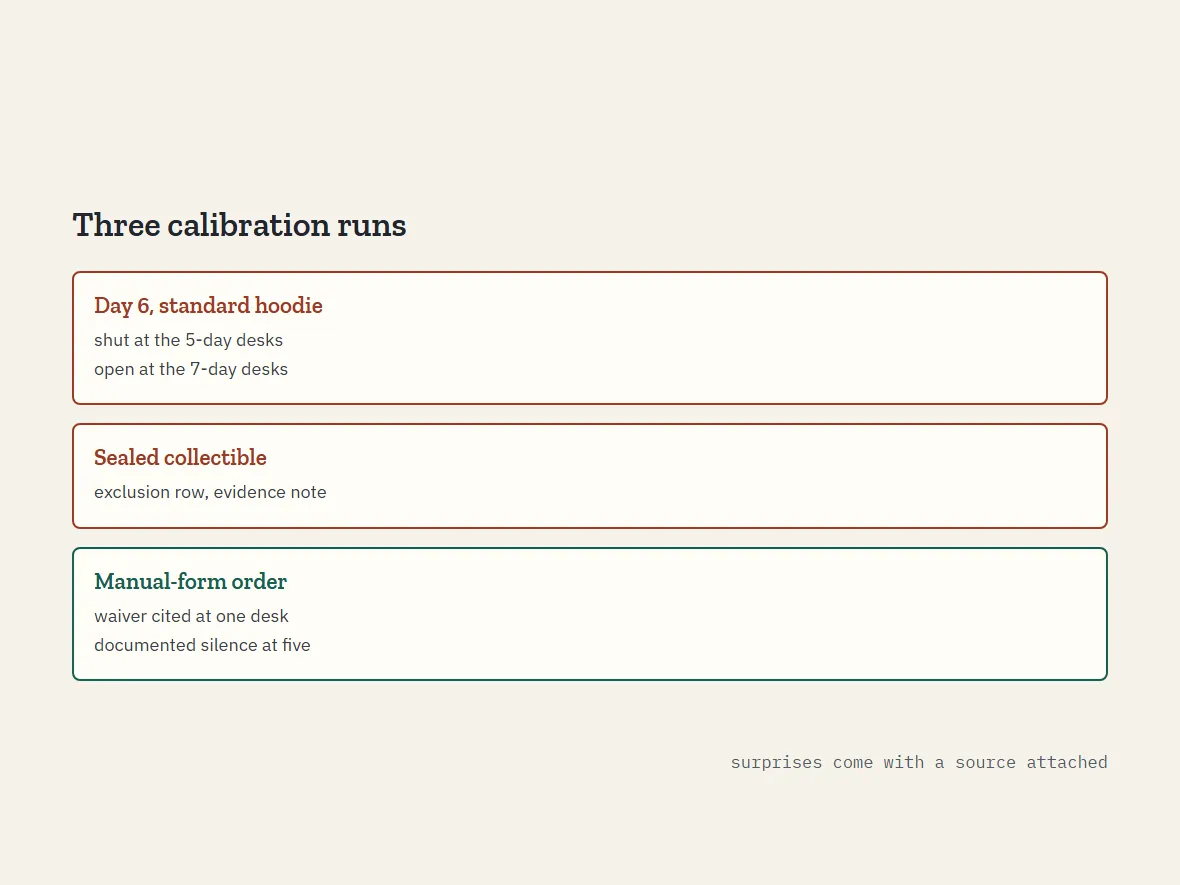
Sample runs, for calibration:
- Day 6 after stock-in, standard hoodie: four desks already read shut; at the 7-day desks the door still stands open. Clock labels decide this one, not day counts.
- Sealed collectible at any warehouse: the return verdict goes to the exclusion row, and an evidence note explains why QC photos show packaging only; the clause that shuts the door is printed with its source.
- Manual-form order at the desk that publishes manual-form terms: cancel and return doors flip to shut with the waiver clause cited; at the five desks that publish nothing, the checker says exactly that and routes you to support, in writing.
When a verdict surprises you, that is the ledger working: the surprising clause has a date and a source next to it. Terms move; when an operator rewrites a page, the updates log records the re-read, and this checker’s data file carries the build date 2026-10-13.