
Sellers, listings and the checks before any cart
Agents relay your return requests to sellers, which means the seller you picked is the ceiling on every remedy you have later. Vetting sellers and judging listings are therefore undo decisions made in advance.
Vetting sellers with the agent layer in mind
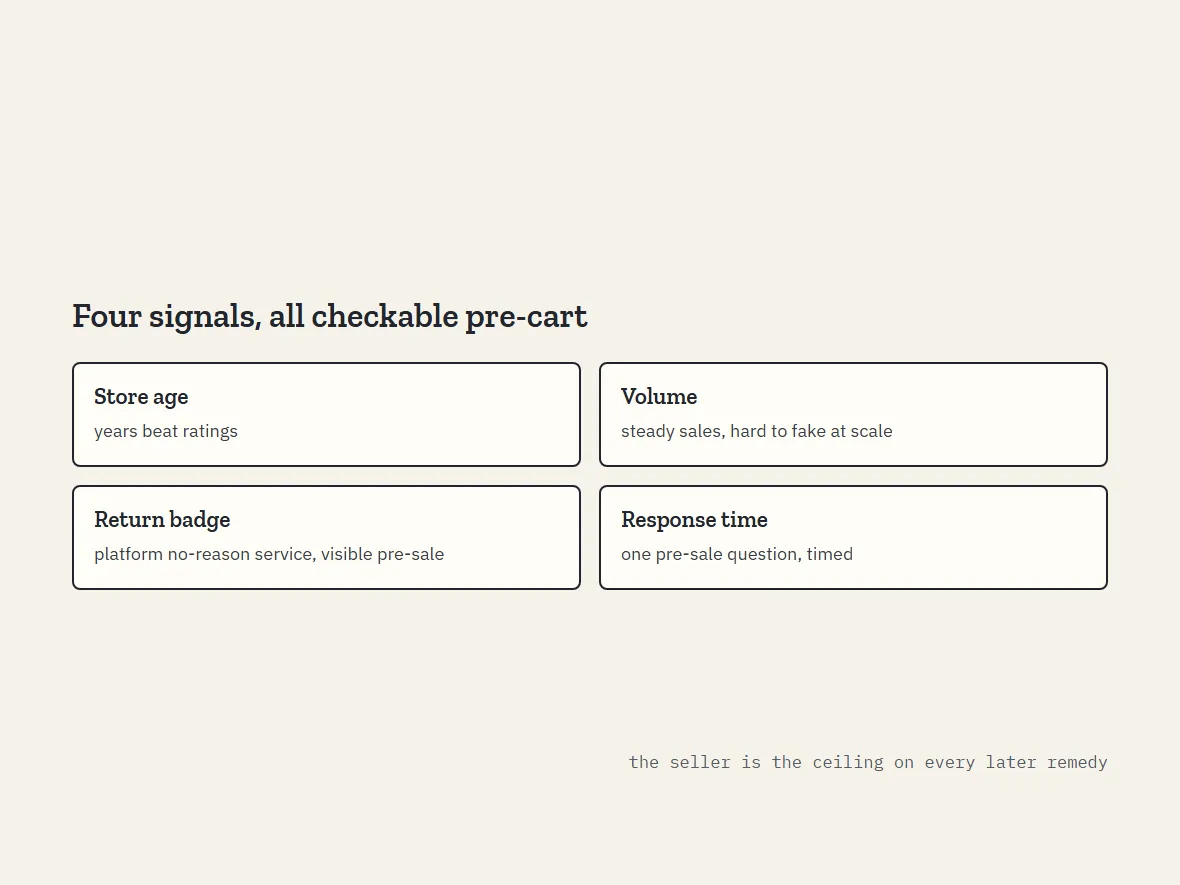
How to vet a seller through an agent differs from vetting one directly, because the marketplaces are domestic and the signals arrive translated:
- Store age and volume beat ratings: platform badges and sales counts are harder to fake at scale than review text; a three-year store with steady volume is a different risk class from a three-week one.
- Return posture is visible before you buy: listings that advertise the platform’s no-reason return service feed directly into the agent windows on the undo page; desks relay that service, they do not replace it.
- Reachability is testable: one pre-sale question through the agent desk; a seller that answers in hours during the sale will exist after it.
- Same-image clusters deserve the cheapest click: when six stores share one photo set, pick on terms and store history, since the photos no longer separate them.
The one thing vetting cannot do is grade goods. This site does not judge authenticity or rank items; it reads terms, and sellers are where the terms chain starts.
The four lines a listing hides in plain sight
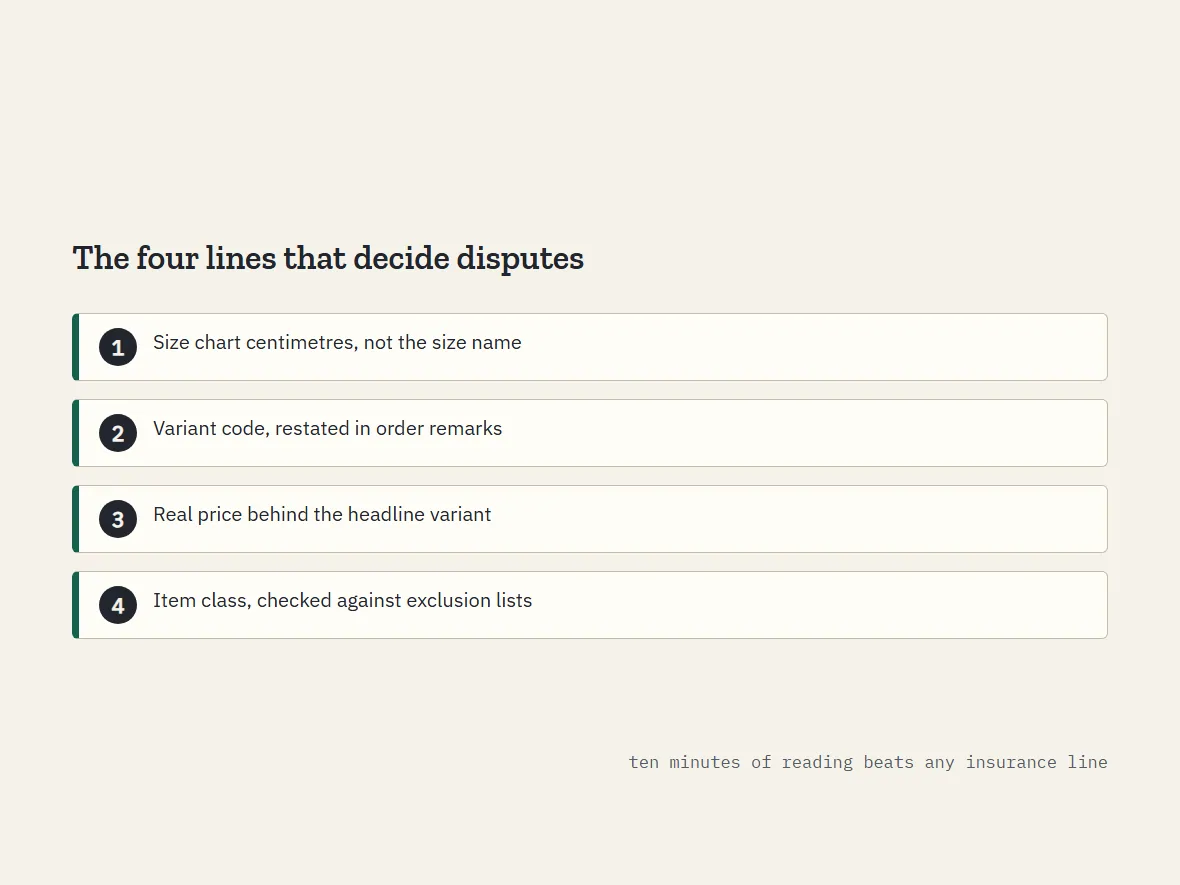
Deciding what to order from a listing is mostly reading comprehension under bad lighting:
- Size charts over size names: the label M means nothing; the garment’s pit-to-pit centimetres mean everything, and warehouse QC will verify the label, not the fit.
- Variant codes over colour words: note the SKU variant you want and restate it in order remarks; a saved variant gives you a concrete record to compare with warehouse photos.
- Multi-item listings hide the real price: the headline price is often the cheapest variant; the one you want sits in the options.
- Exclusion classes decide your window before you click: underwear, food, custom work and opened media gut the return ladders at every ledger desk; the lists are on the undo page.
Pre-purchase checks and insurance answer different questions; review the terms on the shipping page.
Before you order: the short list of expensive habits
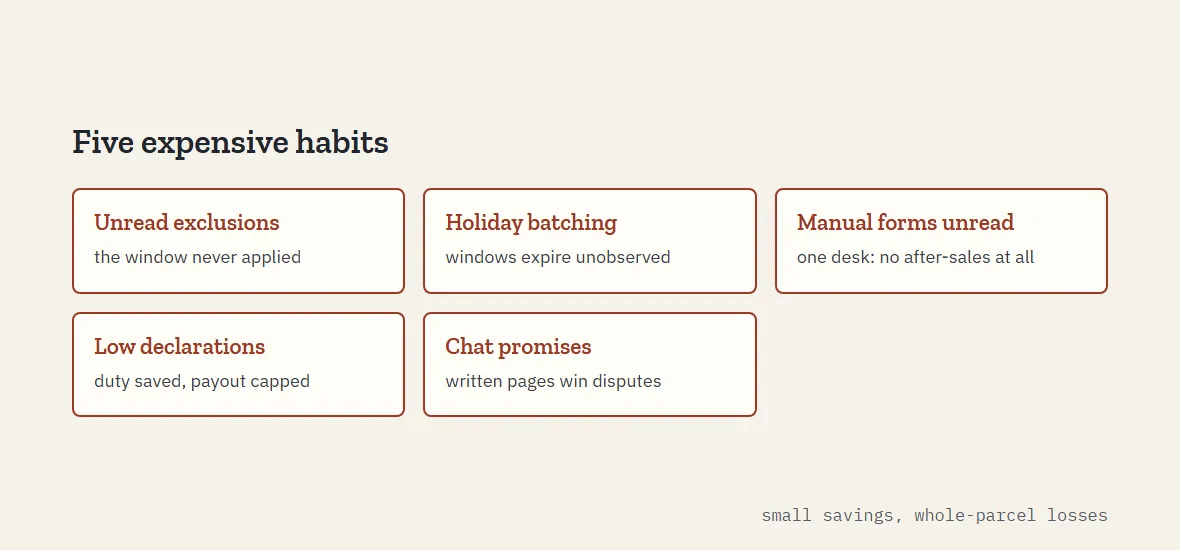
The watch-outs that recur across every community thread and every ledger desk’s dispute pages, compressed:
- Ordering before checking the exclusion lists, then discovering the window never applied to that item class.
- Batch-ordering before a holiday, so every stock-in lands while nobody is reading QC photos and every window expires unobserved.
- Using a manual request form (Fill and Buy, DIY order) without reading its terms: one ledger desk prints that such orders carry no after-sales and no cancellation after payment (help page, read 2026-10-10).
- Declaring low to save duty, then meeting the same figure as the compensation cap.
- Trusting chat promises: check the applicable written terms and keep a relevant support answer with the order; a promise that matters is a promise you ask support to repeat in writing.
The positive version of this list is the walkthrough, where each station names its exit.
A comparable listing needs a comparable option
Imagine two shops using the same jacket photograph. One selected option is lined, the other is unlined, and their displayed minimum prices refer to different sizes. Comparing the title price alone hides the purchase you actually want.
Choose the intended option at each shop and record its measurements, included pieces, quantity, price and domestic delivery. Look for relevant recent feedback on that option, then ask about an unresolved specification before payment. Sales volume and a store score are context, not evidence that this particular item will match.
After purchasing, preserve the selected option and any written clarification. They let you ask a precise question when warehouse photographs arrive. If the label matches but the actual measurement matters, ask for that measurement; a matching label is not a fit guarantee.